
Blowing vs. plowing
A blower throws snow. A plow pushes it.
Nearly every practical difference between the two services comes out of that one sentence. Here is what it means on a Minnesota driveway from the first storm in November to the last melt in April.
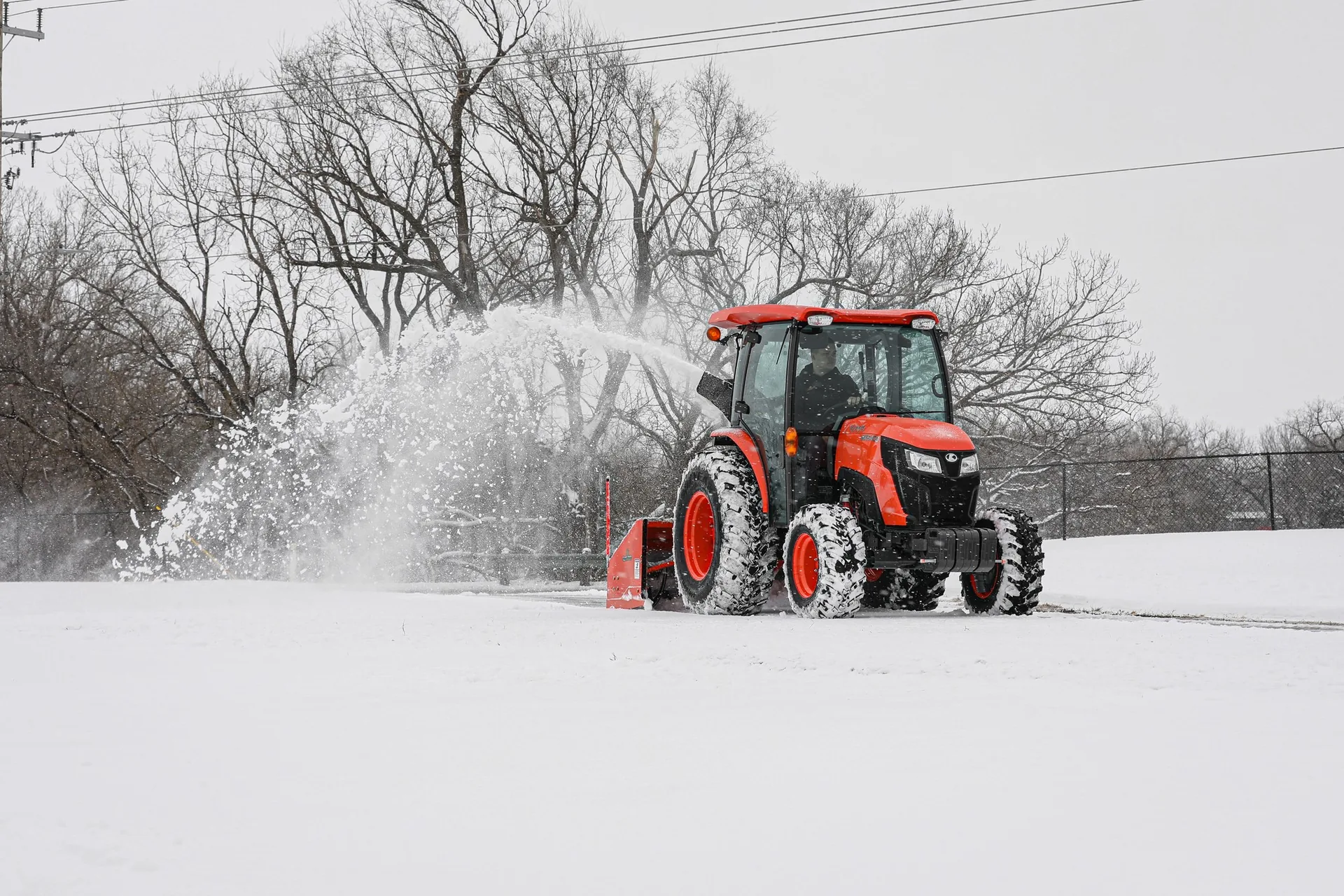
In short
The core difference is that a blower throws snow while a plow pushes it, and most of the practical advantages follow from that. A plow has to put the snow somewhere, so it builds frozen banks along your driveway. A blower scatters it thin across the yard where it never becomes a problem.
- A plow builds banks that narrow the driveway and block sight lines by February
- A blower cuts through the city berm instead of shoving it into a pile by the mailbox
- Skid shoes ride above the surface, so turf edges, pavers, and edging survive the winter
- On gravel, plowing pushes stone into the yard every year and blowing mostly leaves it in place
- Blowers move deep and drifted snow at a steady rate where plows ride up and compact it
- Snow spread thin across the lawn melts weeks earlier than a four foot pile
Both services clear your driveway. The difference is what happens to the snow afterward, and that turns out to matter a great deal over a full winter. A plow blade collects snow and pushes it to the end of its travel, which means every storm adds to a pile that has to live somewhere on your property until spring. A tractor-mounted blower picks the snow up and throws it out across the yard in a wide fan, where it lands a few inches deep and disappears with the next thaw.
| Through the winter | Truck plow | Tractor blower |
|---|---|---|
| Where the snow goes | Pushed into banks along the drive and at the street | Thrown thin across the yard |
| Driveway width in February | Narrowed by frozen banks | Same as it was in November |
| The city berm | Shoved aside into a pile by the mailbox | Cut straight through |
| Turf edges and pavers | Blade catches and gouges under fresh snow | Skid shoes ride just above the surface |
| A 14 inch storm | Rides up and compacts a layer | Steady rate regardless of depth |
| Spring | Piles frozen into April | Melts weeks earlier |
Where tractor blowing wins
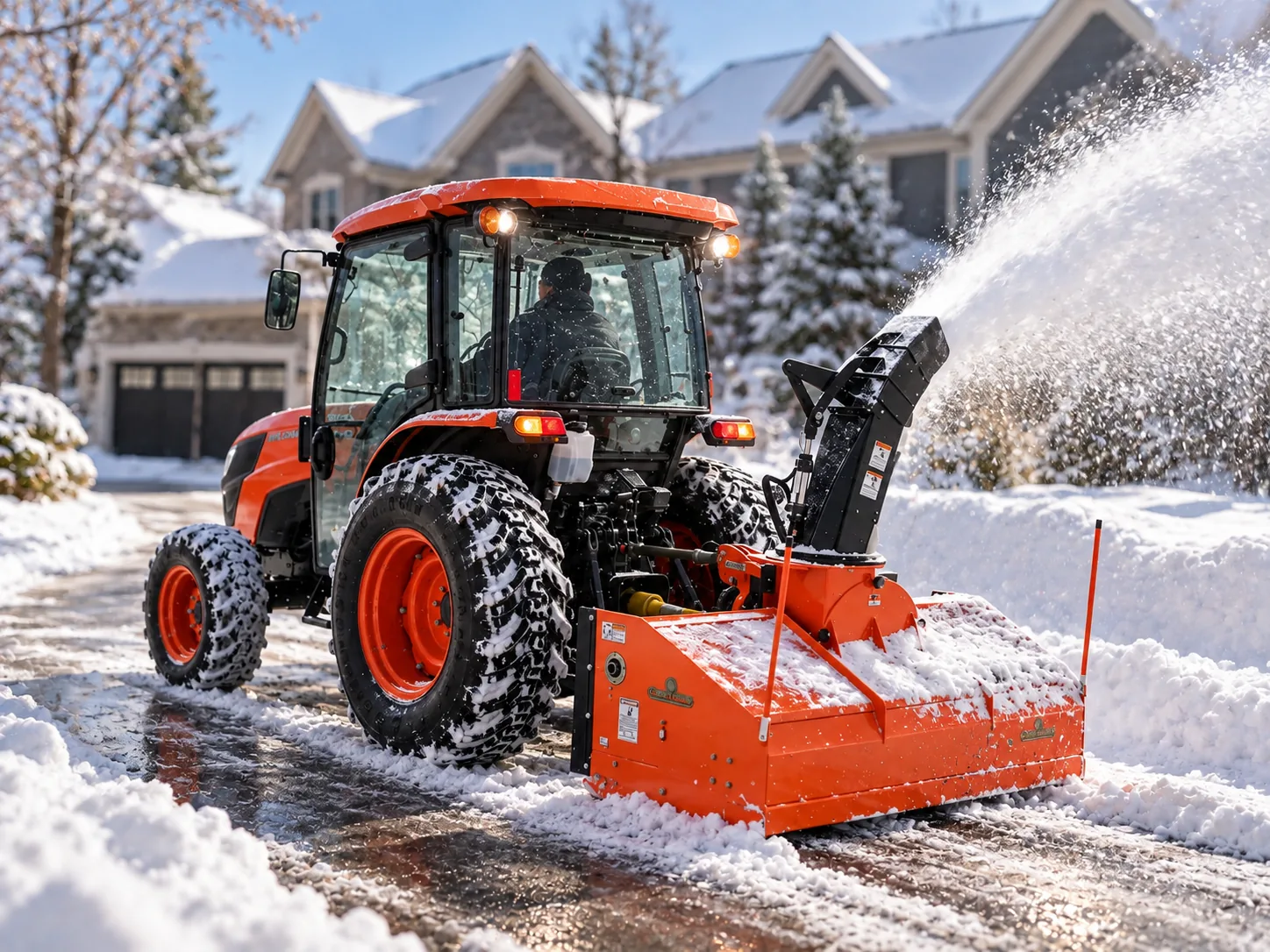
No piles at the edges
The snow never becomes a wall.
A plow has to put the snow somewhere, so it builds banks along the driveway and at the street. By February in a heavy Minnesota winter those banks get tall and frozen. They narrow the driveway, block sight lines when you pull out, and eventually the contractor has to charge extra to relocate them. A blower scatters snow across the yard where it never accumulates into a problem.
- The driveway stays full width from the first storm to the last
- Clear sight lines backing onto the street in January
- No relocation charge in the middle of a heavy winter
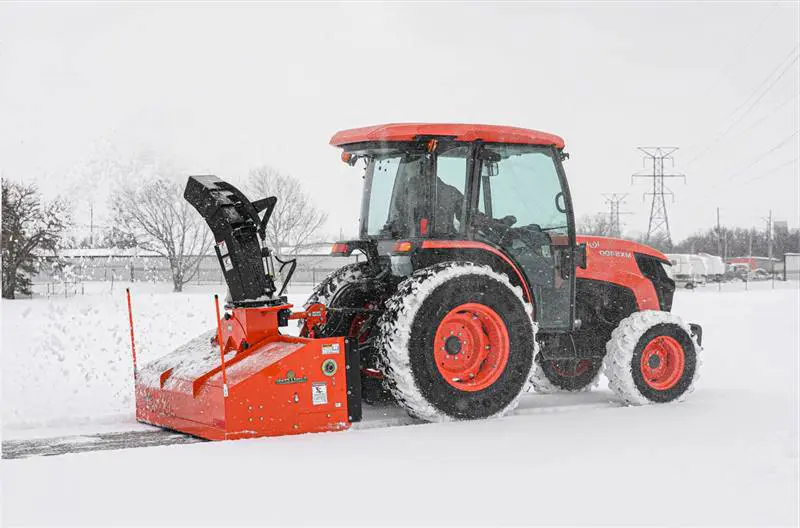
The city berm
The worst part of the storm is the part we handle best.
The frozen ridge the municipal plow leaves at the end of your driveway is the worst part of every storm. A blower chews through it. A plow has to shove it aside, which is exactly where you get the big pile by the mailbox.
- Cut through rather than pushed aside
- No growing mound at the end of the drive
- Included in the season rate, not billed as a follow-up visit
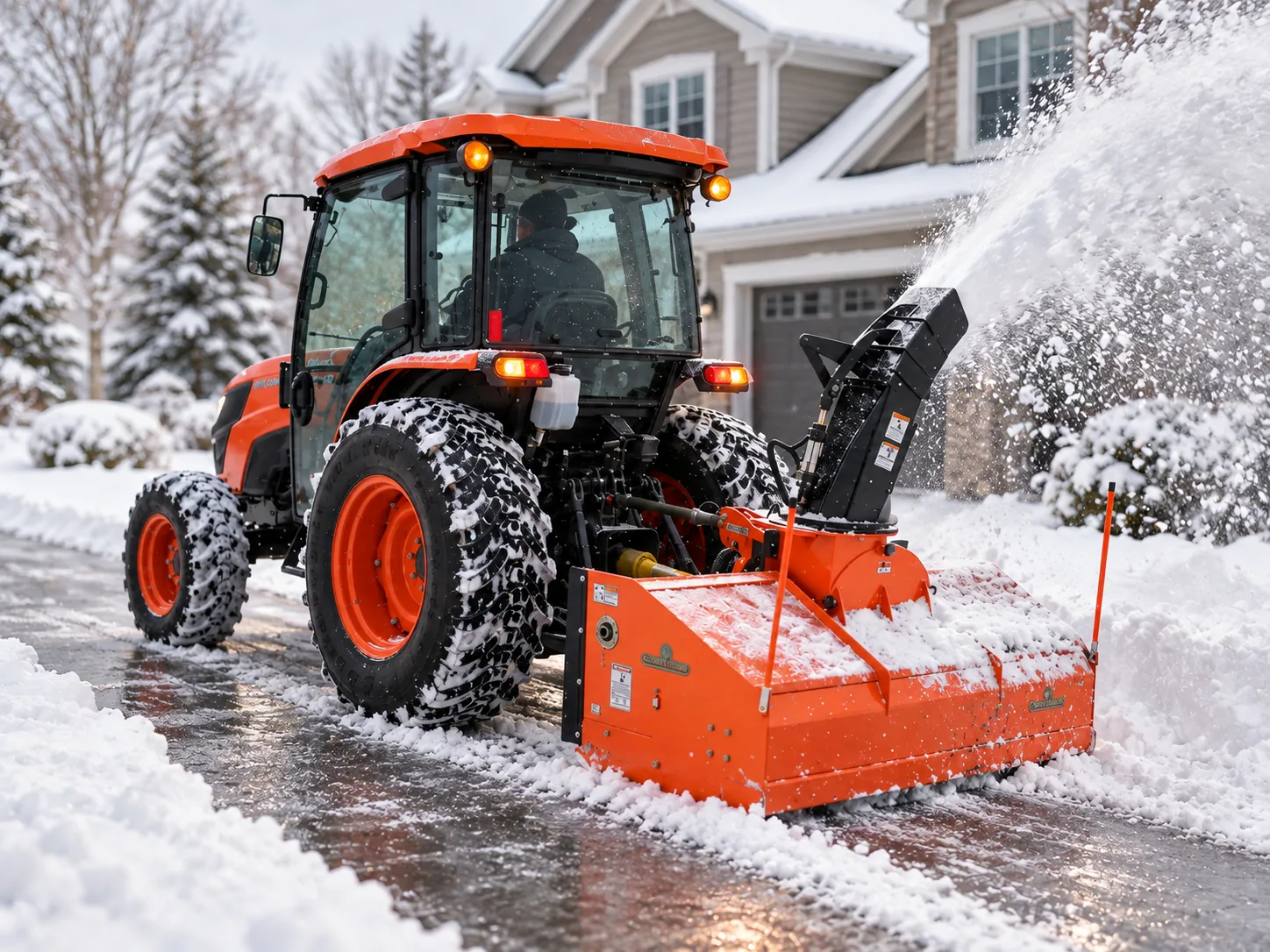
Lawn and hardscape
Less damage to find in April.
Plow blades catch turf edges, gouge sod, and clip curbs, pavers, and landscape edging, especially when the driver misjudges the edge under fresh snow. Blowers with skid shoes ride a fraction of an inch above the surface, so spring cleanup is usually just a few divots rather than reseeding the whole driveway margin.
- Skid shoes float above the driveway surface
- Curbs, pavers, and landscape edging stay where you put them
- Spring repair is measured in divots, not in square feet of sod
And the rest
Four more places the difference shows up.
Gravel driveways
Plowing gravel pushes it into the yard and the ditch every winter. A blower set high leaves most of it in place, so you are not raking stone out of the lawn every April.
Deep and drifted snow
Plows ride up over heavy, wet, or drifted snow and leave a compacted layer behind. Blowers move deep snow at a steady rate regardless of depth, which is what matters in a 14 inch storm.
Faster spring melt
Snow spread thin across the lawn melts weeks earlier than a four foot pile that stays frozen into April and kills the grass underneath it.
Tight lots
Narrow driveways, driveways with retaining walls or fences on both sides, and shared driveways often have nowhere to push snow. Blowing is the only clean option there.
Frequently asked
Blowing vs. plowing, answered.
Is blowing slower than plowing?
On a wide open lot, yes. On a residential driveway the gap is small, and it closes entirely in a deep storm because a plow starts making multiple passes and stacking while a blower keeps moving at one rate.
Where does all that snow land?
Spread in a wide fan across your yard, a few inches deep. That is the point. It never concentrates into the banks that cause the narrowing, the sight line problem, and the pile that is still there in April.
Will you throw snow onto my neighbor's property or my car?
No. The chute is directional and the operator controls throw distance and angle. Because the same team runs your street every storm, they already know which way to aim on your lot.
Do you plow at all?
No. Tractor blowing is the entire service. That focus is why we can hold one flat rate of $785 for the season and run the same team on the same routes all winter.
See the difference this winter.
$785 flat for the season in Woodbury and Lake Elmo.